Why Festival Streets Feel Different at Walking Speed
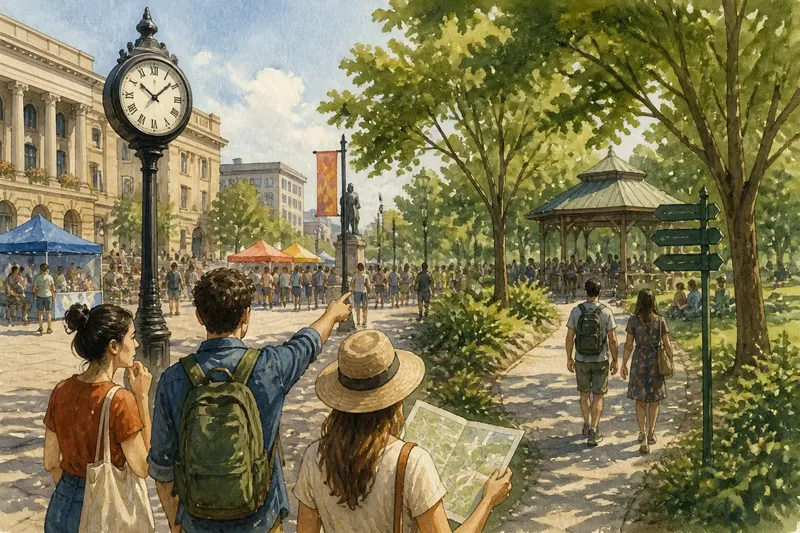
Why festival streets feel different at walking speed: follow changing route cues, choose where to pause, and see how festival activity reshapes a familiar block.
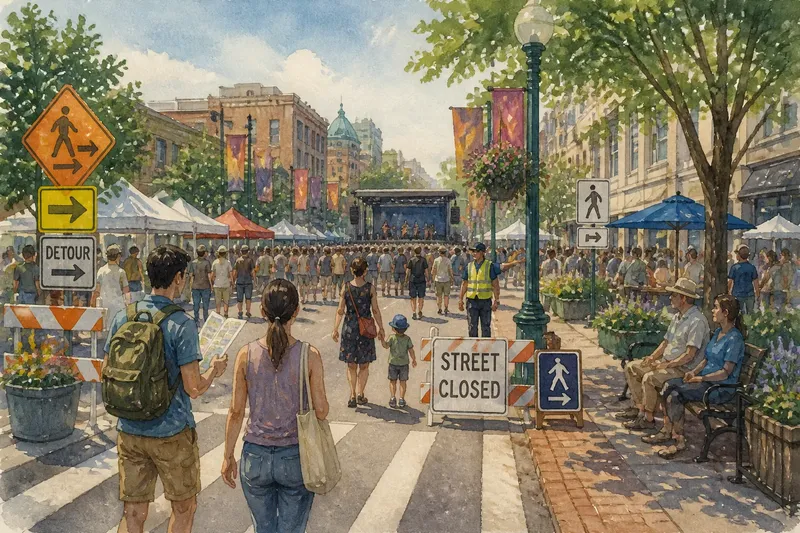
The most common mistake on a festival street is treating every block as a corridor to cross. You may reach your destination, but miss how a temporary stage, a closed intersection, or a line of food stalls changes the route itself. Festival streets feel different at walking speed because each turn presents a choice: follow the event’s main current, take a side route, or pause where the street opens.
Read route cues
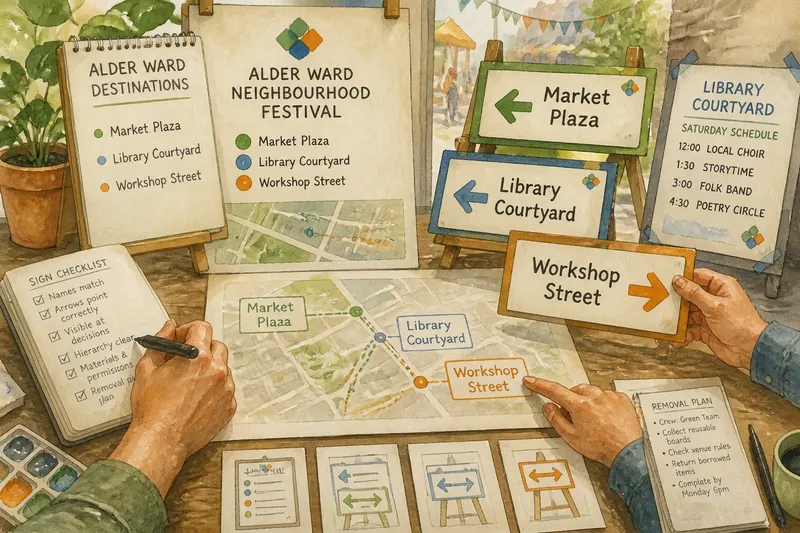
Start with the event map, if one is posted, and identify your destination, the main programmed area, and any signed street closures. Then check what the pavement and barriers show on the ground; festival layouts can make a familiar route work differently for the day.
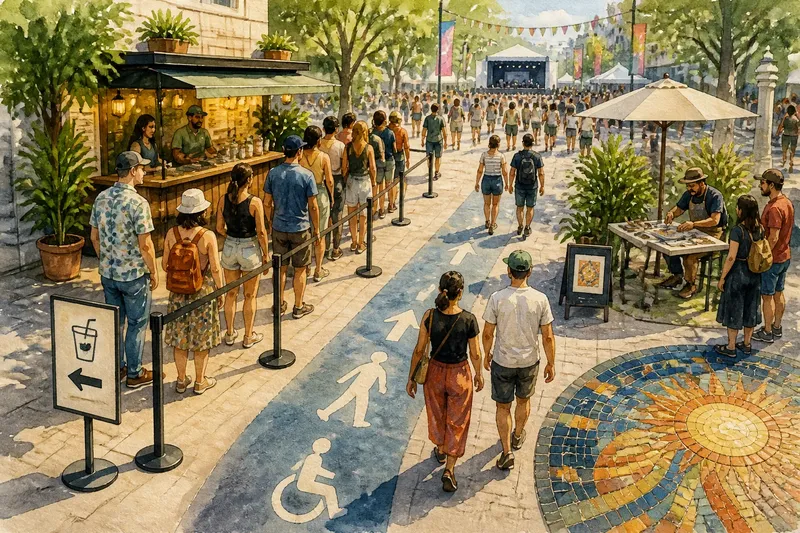
Look for temporary signs, crossing points, barricades, vendor lines, and clear paths to building entrances. These are route cues, not invitations to cut through a setup area. Follow event staff directions and use marked crossings rather than slipping between barriers.
At each intersection, decide whether your next stop is worth following the busiest route. If the path narrows or a queue spills across it, continue to the next signed crossing or choose an open parallel street. The useful question is not simply which way is quieter, but which route still takes you where you intend to go.
Choose a route shape
A direct route works well when you have a meeting point or a performance time to keep. Find the closest permitted crossing, walk to the destination, and leave exploration for afterward. This separates getting there from browsing and reduces the chance of doubling back through a congested stretch.
A loop can show how the event changes across nearby streets without requiring you to retrace the same crowded block. Follow one active street, take a signed or clearly open parallel route, and return by a different crossing. Skip the loop if the side streets are closed, poorly marked, or unsuitable for your group.
Imagine you are meeting a friend by a library, and the festival map marks the main street closed to through traffic while a parallel avenue remains open. You choose the signed crossing to reach the library first, then take the avenue back toward the event; the result is a clear arrival and a return route that avoids retracing the closed block. If signs or staff indicate that the avenue is restricted, you instead follow the posted detour.
Pick a place to pause
Stopping is easier when you choose a place outside the route people need to use. Look for a bench, a plaza edge, a widened sidewalk, or a designated viewing area. Avoid doorways, curb ramps, marked crossings, and the space directly beside a queue.
Before settling in, notice whether people can pass without stepping into the street or separating from their group. If they cannot, move to the edge of the activity or keep walking until the path widens. A good pause point lets you watch the event without turning your own position into an obstacle.
Compare the main and side streets
The main street usually offers the clearest view of the event’s shared activity: performers, announcements, and the places where people gather. Its tradeoff is that queues and spectators can make forward movement less direct. Use it when the central program is your destination, and leave extra room for stops.
A side street can provide a more direct connection between destinations or a way around a busy block, but it may have fewer event features. Check signs before using it, since festival routes and access rules can change from street to street. Choose based on the next stop you need to reach, not on the assumption that every side route is open.
Festival street routes?
How do I find the open route?
Check the event map and posted detour signs, then confirm the route at the next intersection. If a barrier or staff direction conflicts with your planned path, follow the marked detour instead.
Where should I pause?
Choose a bench, plaza edge, designated viewing area, or widened sidewalk where people can pass. If your group blocks a doorway, crossing, or queue, move to a more open spot.
Should I take a side street?
Use one when it is open and connects to the destination you need. If signs show a closure or the route leads away from your next stop, stay on the marked main route or follow the detour.
What should I do if a route is blocked?
Do not cross barricades or enter event work areas. Find the nearest posted detour or ask event staff which public route remains open.
Check the next move
Use this quick route check at each turn. For every observation, make the stated choice; if the first option does not fit, use the alternative.
- Destination: If your next stop is on the signed route, follow it; if not, check the map for a permitted connecting street before turning.
- Closure: If a barrier blocks the street, take the posted detour; if no detour is visible, ask event staff rather than passing the barrier.
- Crossing: If the crossing is marked and open, use it; if it is closed or crowded beyond safe passage, wait for direction or use the next signed crossing.
- Queue: If a line leaves a clear path, continue along that path; if it blocks the route, go around only where signs and barriers permit.
- Pause point: If people can pass your chosen spot freely, stop there; if they must step around you, move to a bench, plaza edge, or wider sidewalk.
- Side street: If it is open and leads toward your next stop, use it; if access is unclear or restricted, remain on the marked route.
Make each turn count
Walking speed matters because it gives you time to read signs, see where temporary barriers redirect movement, and choose a route that matches your next stop. The main path may suit a performance; a permitted side street may suit a meeting point or a return trip.
Before leaving the festival area, check the nearest open crossing and note which route connects to your destination. That small decision can make the final stretch clearer, especially when the street layout has changed for the event.