How to Design Temporary Festival Signs for Clear Routes and a Cohesive Event
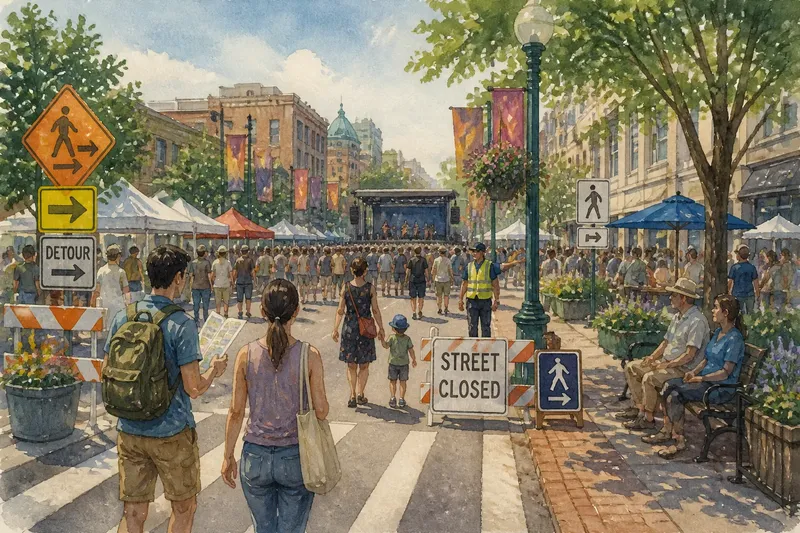
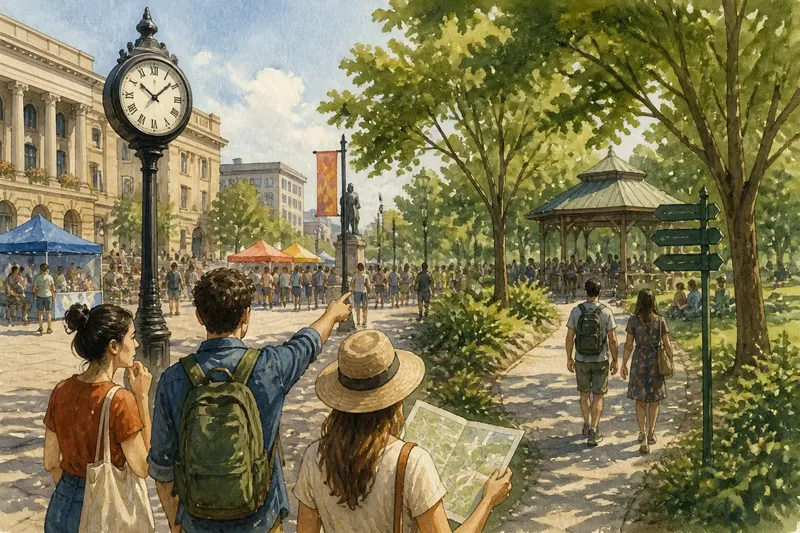
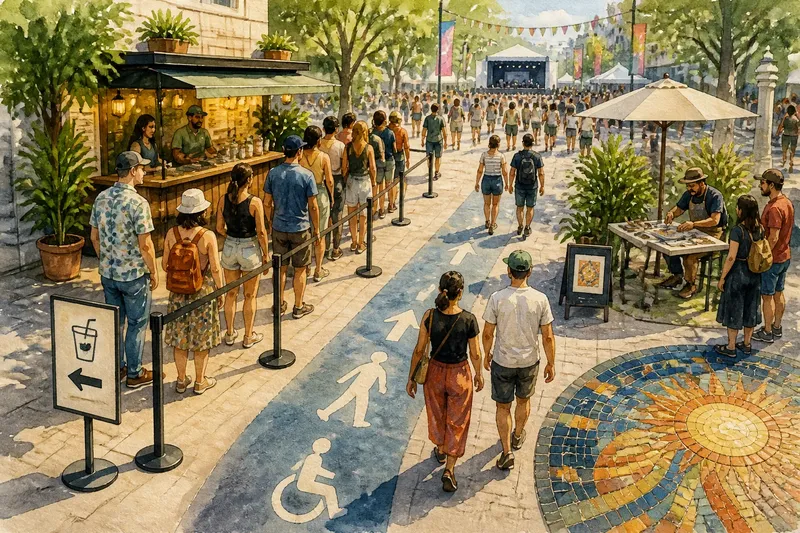
Temporary festival signs can make a scattered event easier to follow. Plan names, arrows, placement, and removal so visitors can find each public gathering space.
The most common mistake with temporary festival signs is designing each one in isolation. Visitors pay for that mismatch with extra pauses and wrong turns, especially when a gathering spreads across several streets or venues. A useful sign system gives people clear directions while making the event’s separate places feel connected.
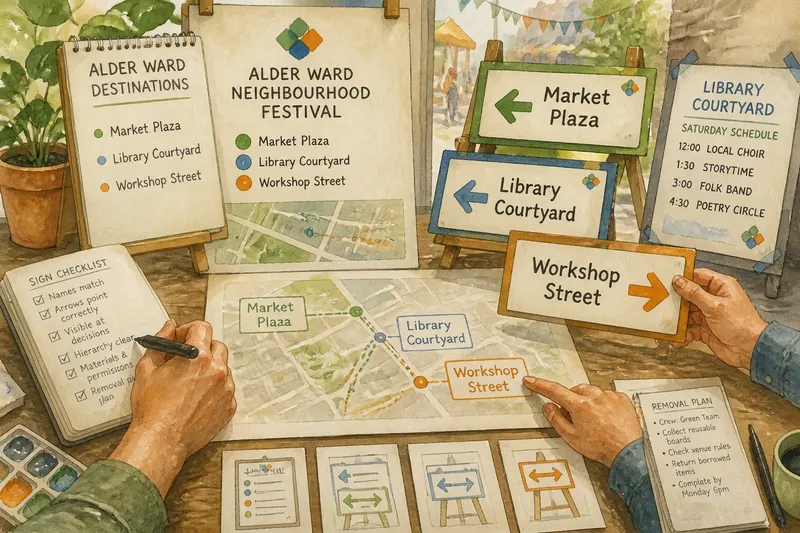
Imagine organizers planning a fictional neighborhood festival in Alder Ward, with a market in a plaza, music in a library courtyard, and workshops on a side street. They have paper, reusable boards, and a route sketch, but no shared naming plan. By settling the names and sign roles before making anything, they can reduce confusion without treating decoration as a substitute for directions.
Set destination names
Choose the exact public name for each destination before drafting signs. Put those names on the route map, directional boards, and venue notices in the same form; abbreviate only when the shorter version is unmistakable at that location.
For Alder Ward, the organizers write “Market Plaza,” “Library Courtyard,” and “Workshop Street” on a shared list. They use those names on every mockup rather than switching to “the market” or “workshops” at random. A visitor comparing a map with a street sign can then recognize the same destination without translating between labels.
Match signs to tasks
Give each sign a primary job. A large entrance board can identify the event and list its sites, an arrow board can direct people at a turn, and a venue notice can show a schedule or access details where visitors can pause.
Choose materials for the setting and information. A paper notice taped to an approved indoor board can hold a schedule; a rigid reusable board on an easel can carry a short route instruction; a fabric banner can announce the event where it will not obscure other signs. Check the venue’s mounting rules and the material’s handling instructions before installation.
Keep the visual system small and repeatable. For example, use one event mark, a consistent type style, and a limited palette, while letting each format carry only the words its task needs. On a directional sign, the destination and arrow should be easier to spot than the event mark or sponsor names.
Place signs at decisions
Walk the intended route on a map or in person, where access and permissions allow. Mark each point where a visitor must choose a direction, then mark arrival points where a person needs confirmation that they have reached the right entrance.
Do not space signs evenly just to make the route look balanced. A board may be hidden by a vendor canopy, lost against a pale wall, or confused with a permanent notice. Review the proposed position from the approach visitors will take; if the message is obscured or hard to distinguish, move it or adjust the contrast and mounting position.
Check the route plan?
What belongs on an arrow sign?
Use a destination name and a clear arrow, plus only a detail that changes the route choice. Put schedules and descriptions on a separate board so people can stop to read without blocking the decision point.
How can signs look related?
Repeat a few elements, such as the event mark, type style, and colors, while changing the format to fit each task. An entrance board and a small arrow can look like parts of one event without carrying identical content.
Should signs use icons?
An icon can support a plain destination name, but it should not replace a label people may need to interpret. If an icon could mean several things, keep it decorative and let the words identify the place.
What happens to signs afterward?
Plan who will remove temporary signs and collect borrowed or reusable boards once they are no longer useful. Check venue or local rules for removal and disposal, and keep the final sign list if organizers may need to plan another gathering.
Review each sign
Make paper mockups and compare them against one route sketch before producing the signs. Check that names match, arrows point toward the intended destinations, each sign sits at a useful decision or arrival point, and event branding does not crowd out directions.
- Observe whether the map and every sign use the same destination name; if they match, keep the wording, but if they differ, revise the map or signs to use one name.
- Observe whether each arrow points along the route to its named destination; if it does, keep the direction, but if not, redraw the arrow or move the sign to the correct approach.
- Observe whether a sign is visible from the route visitors will use; if it is clear, keep the location, but if it is blocked or easy to miss, move it or change its mounting position.
- Observe whether the destination and arrow stand out before decorative marks; if they do, keep the hierarchy, but if not, enlarge or reposition the instruction and reduce competing detail.
- Observe whether the material and mounting method fit the location’s rules; if both are acceptable, proceed with that setup, but if either is uncertain, ask the venue or relevant authority and choose an approved alternative.
- Observe whether each sign has an assigned removal and collection plan; if it does, keep the assignment, but if not, name a responsible crew member and arrange for collection before installation.
Say the Alder Ward organizers have a route sketch with a fork leading either to the library courtyard or Workshop Street. Their draft arrow at the fork says “Workshops,” while the map and venue list say “Workshop Street”; a volunteer unfamiliar with the plan would have to guess whether those labels refer to the same place. The organizers replace “Workshops” with “Workshop Street,” check that the arrow points down the side street, and compare the revised sign with the map. The result is a consistent route instruction, though they still need to check visibility and permissions at the actual location.
Carry identity lightly
Temporary festival signs can give a gathering a recognizable look without making a short-term arrangement seem permanent. Consistent names, a modest event mark, and information suited to each point on the route connect public spaces while leaving their ordinary uses legible.
Before ordering materials, keep a route map that records each sign’s name, purpose, and intended location. That simple working document helps setup crews place the right board at the right decision point, and gives the removal crew a clear list of what must come down when the event ends.