The Queue Is Not the Whole Gathering
Festival queue design can make waiting easier to understand and the surrounding event easier to notice, while keeping public routes clear and usable.
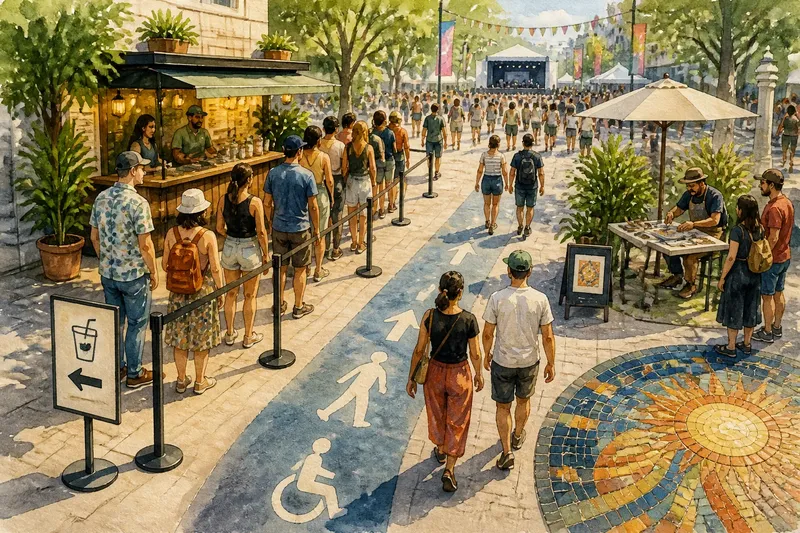
The most common mistake in festival queue design is treating the line as a sealed waiting area, then discovering it has swallowed a sidewalk or turned a square’s entrance into a bottleneck. A line needs a clear route and a clear purpose; without them, visitors lose their bearings and everyone else has to work around the queue.
Make the queue part of the festival’s public life by giving people something they can notice without asking them to stop, join in, or give up their place. Keep the through-route physically and visually separate from the line, so visitors can understand the layout without waiting for a volunteer to explain it.
Map the queue footprint
Start with the service point, then trace where the line will begin, turn, and end. Mark those points on a site plan alongside entrances, vendor fronts, performance areas, and the routes people use to cross the space.
Use cones, rope barriers, or signs to show the queue’s direction, not to create a maze. Place a separate, continuous path for people passing through; make its entrance and exit visible from both ends. At each crossing, use a clear gap or marked crossing point rather than letting the line and public route merge.
Before opening, walk the layout from the viewpoint of someone approaching from each direction. If a person cannot tell where to join or how to pass through without asking, move the signs or barriers until the choices are apparent.
Separate waiting and passing
A queue is an edge in the temporary city: it can divide a plaza, narrow a sidewalk, or redirect people toward another entrance. Treat the through-route as a distinct part of the plan, not leftover space between the line and a wall.
Keep displays, menus, and performance invitations away from crossings and narrow points. A feature that makes people stop can create a second, informal line even when the official queue is clearly marked. Put shared points of interest where people can view them from the queue or the public route without blocking either.
Include access in the same layout. Provide a step-free route, enough room for mobility devices to move and turn, and a way to leave the line without squeezing between people. If someone may need an alternate waiting arrangement, state who to ask and where that option is available; confirm details against the venue’s access plan and local requirements.
Choose a passing cue
Good shared attention is optional and quick to grasp. A festival map showing nearby stages, a short demonstration visible from several angles, or a view into an active plaza can give waiting visitors a connection to the event without adding another task.
Match the cue to the line’s movement. If people advance in bursts, favor a large, brief prompt or something visible while moving. Avoid long text panels or hands-on activities at the service point, where people may stop suddenly or lose track of their turn.
Do not add an attraction just to disguise waiting. If the line already has shade, a clear view, and a steady flow, extra material may only add clutter. Let the queue remain a useful route to the event, not a competing event of its own.
Queue design questions?
How do you mark a queue entrance?
Place a sign at the actual start that names the service and points toward the line’s direction. If people still approach from the wrong side, add a matching direction sign where they make that turn.
What belongs beside a fast-moving line?
Use information that can be understood at a glance, such as a simple site map or a short schedule display. If visitors stop to read it, move it farther from the queue or simplify the message.
How can someone leave without confusion?
Keep an exit gap visible and do not arrange barriers so they trap people inside the line. If rejoining is allowed, post the rule near the exit and set a clear point for returning without crossing the through-route.
What signals that the layout needs a change?
Watch for repeated questions about where to join, people stepping into the public route, or visitors clustering around a display. If any of these occur, move the sign, queue boundary, or display before asking staff to manage the same confusion verbally.
Check the layout live
Walk the route during the event and check what people can actually see and do. Use these observations to choose a specific adjustment:
- If the queue entrance is hard to spot, move its sign to the approach point; if it is already visible, leave it in place and check the next decision point.
- If the line crosses the through-route, shift the barrier or queue turn; if the route stays clear, keep the boundary and watch the crossing.
- If people stop at a display and block movement, relocate the display; if they can view it without stopping, keep it outside the route.
- If someone using a mobility device cannot pass or turn, widen or reroute the accessible path; if access remains clear, preserve the current layout.
- If visitors leave the line because they cannot identify the service, add a service label at the entrance; if the service is clear, check whether the line’s direction needs a sign instead.
- If people who leave cannot tell where to return, mark the re-entry point or clarify the rule; if the exit and re-entry are already understood, avoid adding unnecessary barriers.
Say you are planning an invented festival with a drink stand beside a public mosaic. The starting plan puts the queue across a walkway, and a small artist demonstration is planned beside the same crossing. First, draw the queue along the plaza edge and mark a separate through-route from the walkway entrance to its exit. Next, move the demonstration where it remains visible from the line but does not draw people into the crossing. Then walk both routes and check whether the queue entrance, public passage, and step-free path are each apparent. If the demonstration still causes people to stop in the through-route, move it again; if the passage stays clear, keep the arrangement. The expected result is a readable line and a usable walkway, with the mosaic and demonstration still available to notice.
Give staff a short, consistent description of where the line starts, which way it moves, and where people can leave. If the arrangement changes, update the signs and staff instructions together; conflicting directions create confusion even when each sign is clear on its own.
Make the line belong
A queue cannot replace the performance, food, or meeting place that brought people to the festival. But thoughtful festival queue design can help visitors stay oriented and notice the event while protecting the routes other people need.
Before opening, check the line from the street, the service point, and the through-route. If each view makes the choices clear—and no display or barrier quietly claims the passage—the queue can sit within the gathering without taking over the public space.