Choosing a Festival Gathering Place in a Square or Park
Choose a festival gathering place with a clear arrival cue, a usable route, and enough room to pause, so visitors can meet without disrupting public life.
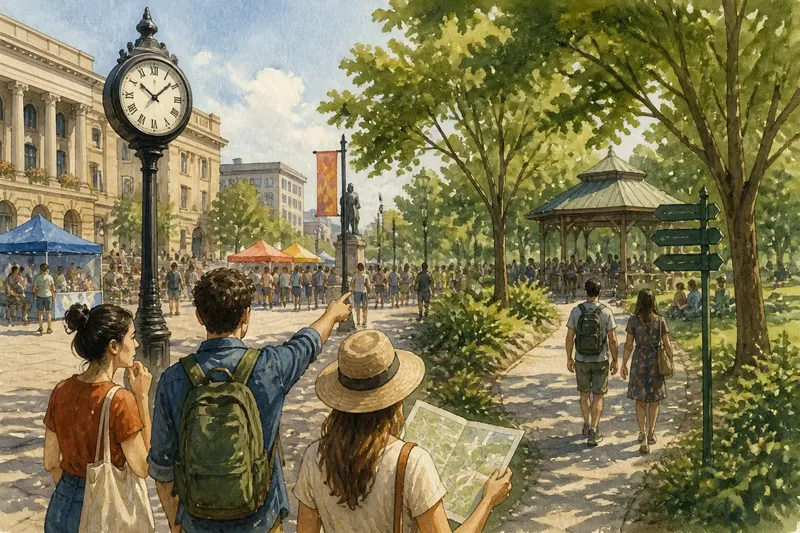
The common mistake in choosing a festival gathering place is naming a broad area instead of a spot someone can recognize on arrival. “In the park” leaves latecomers searching, while “by the clock on the library side of the square” gives them a visible target. To choose a festival gathering place, compare how a square and a park work as meeting points, then decide which better fits the gathering.
Choose A Recognizable Anchor
A useful meeting point has a feature people can name and see from the route they are likely to take. In a square, that might be a public clock, a distinctive statue, or the steps of a civic building; in a park, it could be a pavilion at a named path junction.
Check whether the feature is easy to distinguish from nearby objects and reachable without crossing an active festival area. “By the fountain” is too vague if the square has several fountains or if the nearest path does not lead to it.
Look at the place from a visitor’s likely arrival points: a transit stop, festival entrance, or nearby street. A good anchor should make the next move apparent without requiring someone to stop and compare a map with several similar corners.
Trace The Visitor Route
Walk the route from the nearest entrance and note forks, barriers, and changes in surface. In a park, follow the actual path rather than a straight line on a map; a bridge or planted area can make the apparent shortcut unusable. In a square, check whether kiosks, installations, or dense activity conceal the landmark or block a direct approach.
Consider what the meeting point asks people to do once they arrive. A central feature may be visible but leave no suitable place to pause. A park path may be clear but too narrow for a group to gather without interrupting walkers.
Keep the meeting place separate from the route itself. Choose an edge or nearby open area where people can wait without turning a busy crossing, stage entrance, or everyday path into a bottleneck.
Compare The Setting
A square makes a gathering legible as part of civic life: buildings, public art, and the everyday movement around them give it a public address. A park connects the meeting to landscape and may feel more removed from festival activity, especially where paths curve or trees screen the gathering.
Neither setting is automatically more welcoming. Check whether visitors can reach a firm, usable surface and find a place to rest without sitting on the ground. Notice shade or shelter, and consider whether nearby activity will make conversation difficult.
Also ask what the festival shares with people already using the site. A square may be a route across town or a place to pause at lunch; a park may serve walkers, families, and people seeking quiet. The gathering should fit alongside these routines, not make others feel pushed out.
Make The Tradeoff
Say you are choosing between a plaza beside a transit stop and a park clearing beyond a forked path. The plaza has a visible clock and a direct approach, but little shelter; the clearing has shade and a pavilion, but visitors must follow a winding path. If the gathering is a brief reunion for people arriving separately, the clock may outweigh the plaza’s exposure. If it is an unhurried conversation and the pavilion is clearly named, the park’s shelter may be worth the less direct route.
Use the checks below to decide what matters for this particular gathering. Each observation points to a decision and an alternative, rather than treating a square or park as the default winner.
- Arrival anchor: Check whether the landmark is visible from the main approach. If it is, name it in the directions; if it is not, choose a clearer feature or another meeting point.
- Route: Check for forks, barriers, and confusing crossings. If the route is direct, keep it; if it is not, select a simpler approach or a different spot.
- Surface: Check whether the path and gathering area are firm and usable. If they are, retain the location; if they are not, move to an accessible route and surface.
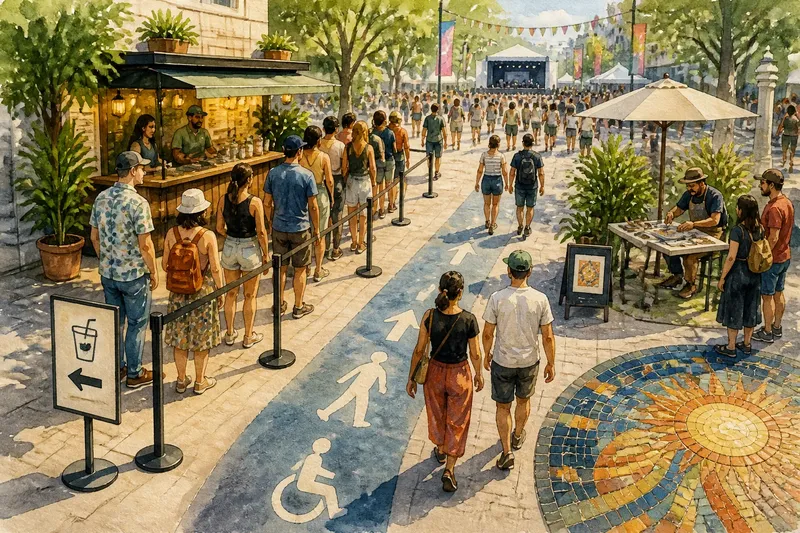
- Waiting space: Check whether people can pause without blocking a path or entrance. If they can, use the spot; if they cannot, shift to a wider edge or nearby open area.
- Rest and shelter: Check for a usable seat, shade, or shelter suited to the expected wait. If the site has one, note it in the plan; if not, choose a more comfortable nearby point or keep the gathering brief.
- Sound: Check whether nearby amplified activity will make conversation difficult. If voices will be easy to hear, keep the site; if not, move farther from the sound while keeping a recognizable anchor.
- Shared use: Check whether the gathering would interrupt an ordinary route or resting area. If other users can continue comfortably, proceed; if not, choose a spot that leaves their space open.
Give Clear Directions
Write the meeting cue as a place name, a specific landmark, and one approach detail: “At the clock on the library side of the square.” For a park, name the pavilion and the path leading to it, rather than saying “near the trees.” Use the same wording in event materials and messages so visitors do not have to reconcile competing directions.
Recheck the spot near the event, especially if temporary barriers, construction, or a changed activity layout could hide the landmark or close the route. If the original point is hard to reach, move to a nearby location with a clear approach and update every version of the directions.
Which Meeting Point Fits?
Is a square or park easier to find?
Choose the place with the clearest landmark and approach, not the setting that sounds simpler in a message. A square works well when a feature is visible from the entrance; a park can work just as well when the point is named and sits on an obvious path.
What matters for a longer wait?
Look for a usable place to rest, some shelter, and room to wait without blocking others. If the square lacks these, a park pavilion may suit better; if the park route or ground is difficult, a sheltered square edge may be the more practical choice.
Can a park meeting point be accessible?
It can when the route and gathering surface are firm and usable for the visitors expected. Check the actual path and destination; if reaching the spot depends on soft ground or an uneven shortcut, choose a different point.
Should the gathering be beside the busiest activity?
Being nearby can connect the meeting to the festival, but crowding and sound may make it harder to pause or talk. Choose a recognizable point close enough to feel connected while leaving the main activity route clear.
For a festival gathering place, make the final choice around the encounter people need: a quick reunion, a conversation, or a pause before moving on. A clear landmark and an honest route description help visitors arrive; a considerate location lets the festival share the space with everyone else.